Latest review
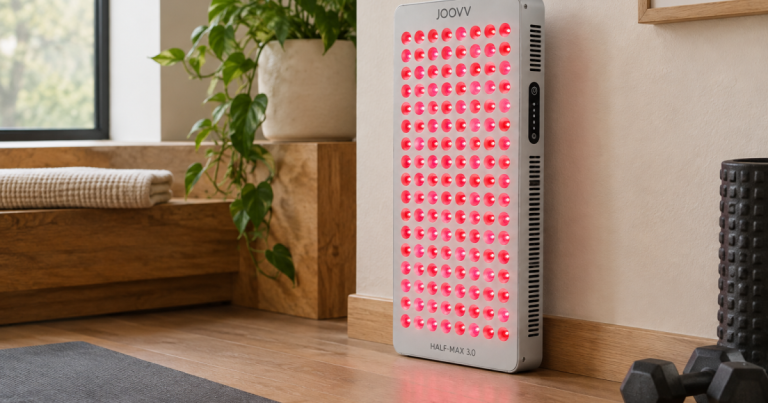
Joovv Half-Max 3.0 Review: Modular Half-Body Coverage at a Premium Price
A closer look at whether Joovv’s modular half-body setup earns its price for home recovery, skincare, and routine-focused…
Read review →
Red Light Ritual Report
Compare specs, setup realities, and routine tips so you can buy confidently and use your red light panel consistently.
Compare PanelsStart exploring
A useful review looks past marketing photos and wattage claims to examine irradiance, coverage, build quality, controls, warranty support, and real fit at home.…
Reviews →Choosing an at-home red light panel starts with matching the device to your body area, room, schedule, and comfort with technical specs. From tabletop…
Red Light Panels →The right buying decision depends less on the loudest claims and more on budget, treatment area, panel size, stand options, return policies, and long-term…
Buying Guides →Consistent sessions matter more than complicated rituals, especially when red light therapy has to fit around work, training, skincare, sleep, or family life. Well-built…
Routines →Where a panel lives can shape how often it gets used, how comfortable sessions feel, and whether the setup becomes a daily habit or…
Setup & Spaces →Recovery-minded users often care about soreness, stiffness, warm-ups, cooldowns, and staying consistent between workouts or mobility sessions. Red light therapy fits best when expectations…
Recovery & Mobility →Freshly published
A closer look at whether Joovv’s modular half-body setup earns its price for home recovery, skincare, and routine-focused…
Read review →Latest guides & advice
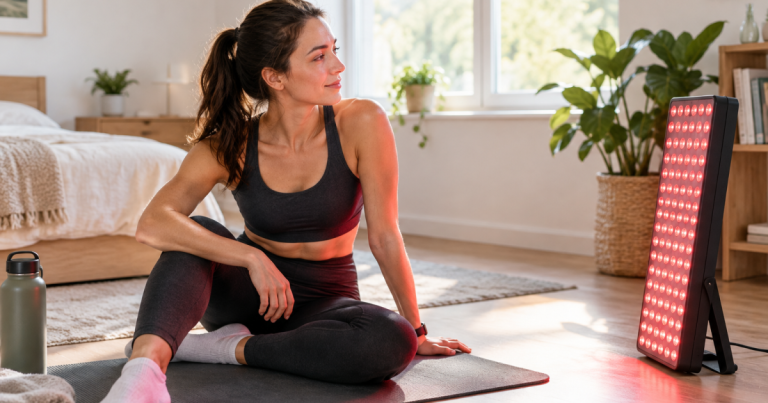
Two weeks is enough to turn a new panel from exciting gadget into a repeatable, low-friction wellness routine.
Read article →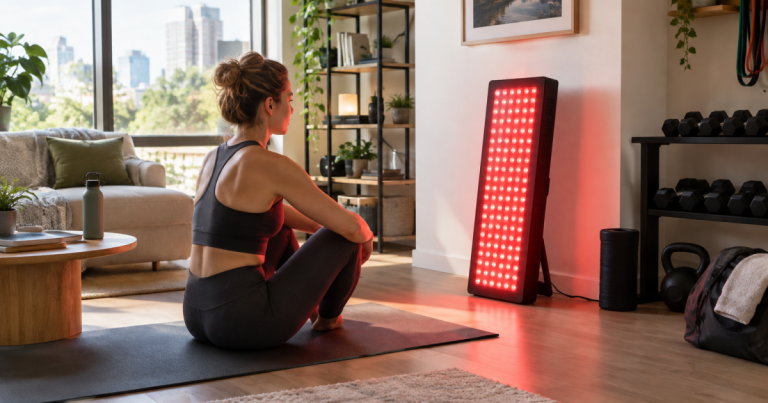
A glowing panel feels futuristic, but the appeal is practical: less friction, clearer routines, and a wellness setup…
Read article →Red Light Ritual Report is for people who are seriously curious about at-home red light therapy panels, but do not want to get lost in vague wellness claims, spec-sheet overload, or one-size-fits-all routines. If you are comparing full-body panels, tabletop devices, modular systems, irradiance numbers, wavelengths, treatment distances, session times, and the practical reality of where a panel will live in your home, you are exactly the kind of reader this site is built for.
Red light therapy is appealing because it sits at an interesting intersection: wellness habit, personal tech, recovery tool, skincare support, and home setup project. A good panel can feel surprisingly enjoyable to use. There is the quiet warmth, the focused pause in the day, the sense that you are doing something intentional for your body without needing a complicated ritual. But buying one can feel less calming. The market is packed with similar-looking devices, bold claims, changing terminology, and pricing that ranges from impulse-buy to major-investment.
This site helps turn that confusion into a clear decision process. Instead of treating every panel like it is either a miracle device or a gimmick, we look at the details that matter in real ownership: wavelengths, coverage area, power density claims, flicker, noise, controls, mounting options, return policies, warranty support, and whether the panel makes sense for the way you will actually use it. The goal is not to push you toward the biggest or most expensive setup. The goal is to help you understand what is worth paying for, what is optional, and what may be unnecessary for your routine.
Red Light Ritual Report is written for the thoughtful buyer. You might be interested in skin appearance, muscle recovery, joint comfort, sleep-supportive evening routines, workout consistency, or simply creating a calm, repeatable wellness practice at home. You may already own a small red light device and wonder whether a panel would be a meaningful upgrade. Or you may be starting from scratch and trying to understand why two panels with nearly identical photos can have very different prices.
This site is also for the person who likes evidence but lives in the real world. You may want to know what current research suggests about red and near-infrared light without pretending every study directly translates to every home device. You may want practical guidance on session length, eye protection, distance, consistency, and skin exposure, but you also want reminders that more is not always better. That balance matters. A home panel should support your routine, not turn into another stressful optimization project.
If you are the type of person who reads the manual, measures the wall space, checks outlet placement, and wonders whether you will really stand in front of a panel four times a week, you will feel at home here. If you are excited by wellness technology but cautious about hype, even better. The best red light therapy setup is not just the panel with impressive numbers. It is the one you understand, place well, use safely, and return to consistently.
Red light therapy panels are often marketed with technical language that sounds precise but can be hard to interpret. Wavelengths like 630 nm, 660 nm, 810 nm, 830 nm, and 850 nm are commonly discussed, but the practical differences are not always explained clearly. Irradiance can be measured in different ways. Beam angle affects how light spreads across your body. A panel’s listed power does not automatically tell you how much usable light reaches your skin.
We help translate those specs into plain-language buying considerations. You will find guidance on why red light and near-infrared light are often paired, why treatment distance changes exposure, why coverage area matters more than many new buyers expect, and why independent testing can be useful when available. The point is not to make everyone become an engineer. The point is to help you ask better questions before spending money.
One of the biggest at-home panel decisions is size. A small desktop panel may be ideal for facial routines, targeted use, or limited space. A mid-size panel can work well for upper-body sessions and flexible placement. A tall full-body panel or modular stack may appeal if you want broad coverage and fewer position changes. None of these choices is automatically right or wrong. They depend on goals, budget, storage, room layout, and patience.
Red Light Ritual Report focuses on the realities of setup because they often determine long-term use. Can you mount the panel safely? Will the door hook work with your door? Is the stand stable? Is the fan noise distracting? Can you use the controls easily? Will you need to move the panel every time, or can it stay in one inviting place? These details may sound small, but they shape whether the device becomes a habit or a closet resident.
A panel is only useful if it fits into your life. Many people start with enthusiasm, then stall because the routine is too ambitious. We favor simple, repeatable patterns: realistic session lengths, manageable frequency, comfortable positioning, and habit cues that make use feel natural. For some people, that may mean a short morning session while listening to a podcast. For others, it may be a post-workout ritual, a wind-down block before a shower, or a focused skincare step a few times per week.
We also emphasize moderation. Red light therapy is not usually about chasing the longest session possible. It is about thoughtful exposure, consistency, and paying attention to how your body responds. That is part of what makes the ritual satisfying. You are not trying to force a dramatic transformation overnight. You are creating a calm, tech-enabled wellness practice that can sit alongside movement, sleep, nutrition, and recovery.
At-home red light therapy exists in a space where research is promising, product marketing is energetic, and consumer expectations can become inflated. We take an evidence-aware approach. That means we are interested in mechanisms, clinical research, dosing concepts, and device design, while also being careful about overclaiming. A study on a specific wavelength, dose, and population does not automatically prove that every consumer panel will produce the same result for every person.
For readers, that distinction is empowering. It helps you avoid both extremes: dismissing the entire category because some claims are exaggerated, or buying a device expecting it to replace medical care. Red light therapy panels may be part of a wellness and recovery routine, but they are not a substitute for diagnosis, treatment, or professional medical advice. If you have a medical condition, take photosensitizing medications, have eye concerns, are pregnant, or are unsure whether light therapy is appropriate for you, it is wise to talk with a qualified clinician.
Reasonable expectations make ownership better. You can enjoy the ritual, track your experience, and make adjustments without needing every session to feel like a breakthrough. Many people value their panel because it gives structure to recovery time, encourages stillness, and makes self-care tangible. That practical benefit matters, even as you stay grounded about what the device can and cannot promise.
A worthwhile red light therapy panel is not defined by one number. It is the combination of appropriate wavelengths, usable coverage, credible output information, safe construction, comfortable operation, and support from the brand if something goes wrong. Price matters, but value is more nuanced than simply choosing the cheapest device or the most intense light. A panel that is easy to position, pleasant to use, and backed by a reasonable warranty may be a better long-term choice than one that looks powerful on paper but frustrates you every week.
We pay attention to the ownership experience because that is where many reviews fall short. A panel can look impressive when unboxed but still be awkward in a small apartment. A compact device can be excellent if your goal is targeted use, but disappointing if you expected full-body coverage. A premium panel may be justified for someone who will use it often and wants refined controls, while a simpler model may be plenty for someone building a basic routine.
The pleasure of this category is that it can be both technical and personal. You can care about wavelengths and stands, but also about the peaceful feeling of stepping into a few quiet minutes of red and near-infrared light. You can compare output data and still choose the panel that best fits your room, schedule, and temperament. That is the kind of decision-making this site supports.
Red Light Ritual Report exists to make the path from curiosity to confident use much easier. We help you compare panels without drowning in jargon, understand setup tradeoffs before the box arrives, and create a routine that feels realistic rather than performative. Whether you are considering your first small panel or planning a full-body home setup, the aim is the same: choose deliberately, use consistently, and keep your expectations grounded.
Red light therapy works best as a ritual when the equipment, space, and habit all make sense together. When those pieces line up, the panel becomes more than another device in the house. It becomes a steady cue to pause, recover, and take care of yourself with intention. Make the choice clear, make the routine simple, and make the ritual one you will return to.