Panel size is the difference between a light routine you actually repeat and one that turns into a constant shuffle. The right red light therapy panel size depends on the body area you want to cover, how much repositioning you will tolerate, and where the panel can live between sessions.
Diagnosis or treatment decisions involving pain, skin conditions, eye conditions, or other medical concerns should be handled by a qualified healthcare professional in line with applicable clinical standards and local safety requirements.
What to know first
A larger panel is not automatically the smarter buy. It usually gives you more coverage per session, but it also asks for more wall, door, stand, storage, and budget space. A smaller panel can be excellent if your goal is face use, a specific joint area, or a simple desk-height routine.
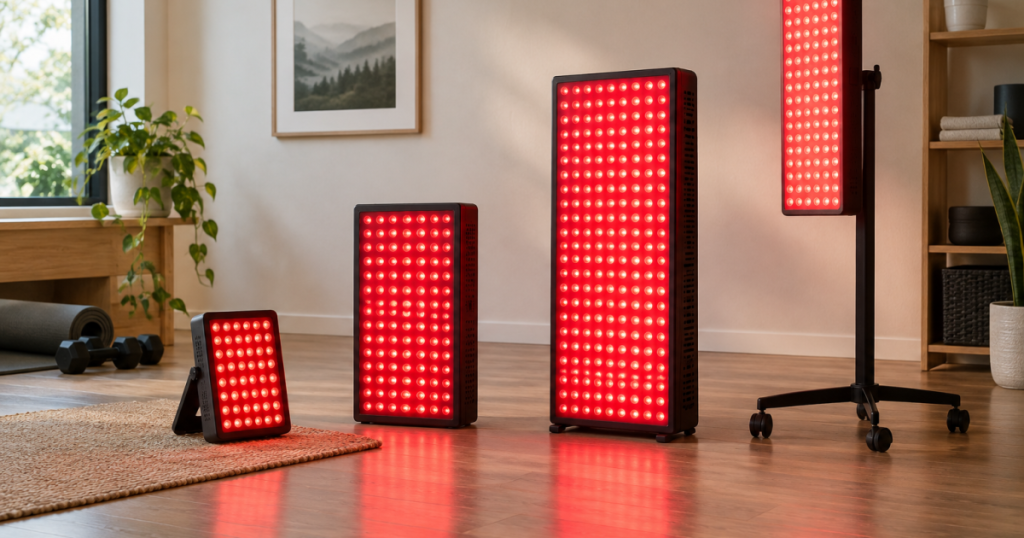
For most home users, the decision comes down to coverage class rather than one perfect measurement. Think in four categories: face-only, targeted body areas, half-body, and near full-body. The more area you want to expose at once, the more panel height and width matter. Beam angle also matters because it affects how widely the light spreads from the panel, although brands do not always report or measure it in the same way.
- Face or neck routine: choose a compact tabletop or small wall-mounted panel that is easy to position while seated.
- Targeted body areas: choose a mid-size panel if you want less repositioning for shoulders, knees, calves, or lower back.
- Half-body sessions: choose a taller panel that can cover torso and hips, or torso and upper legs, from one position.
- Near full-body sessions: choose a tall full-body panel or modular setup, and plan for a stable stand or door/wall mounting.
Step 1: Start with the area you actually plan to use
Before comparing specs, name the routine you want in plain terms. “I want a calmer face-and-neck session before bed” leads to a very different purchase than “I want to stand in front of a panel after training and cover most of my body at once.”
For face use, the most important feature is not maximum panel height. It is stable positioning at a comfortable distance, consistent alignment, and an easy way to keep the session repeatable. A compact panel can work well because the face is a small surface area and you are unlikely to need a tower of LEDs for a five-to-ten-minute seated habit.
For targeted recovery-style routines, width starts to matter. A narrow panel can still be useful, but you may need to rotate your body, move the panel, or run separate passes for each side. That can be fine if you enjoy a deliberate ritual; it becomes annoying if you wanted a quick post-workout reset.
For half-body or larger coverage, look at models in the same coverage class before judging brand claims. For example, a page such as the Mito Red Light MitoPRO 750X specs is useful because it lets you evaluate the panel as a half-body-style option instead of comparing it against tiny tabletop units or very large full-body systems.
Step 2: Match panel height to your session position
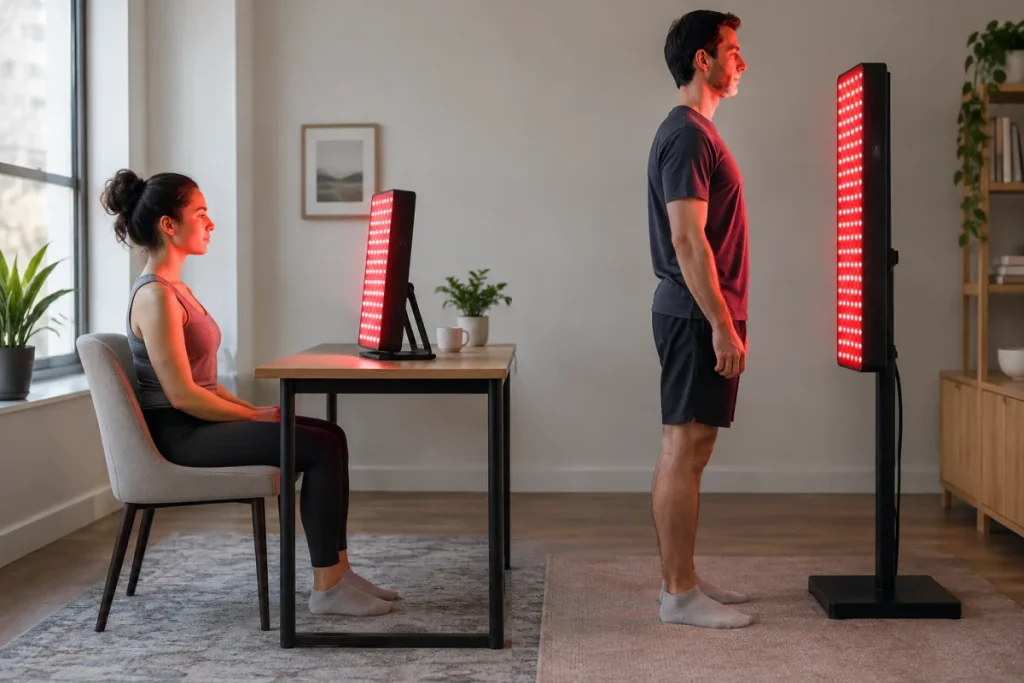
Panel height matters differently depending on whether you sit, stand, kneel, or lie down. A panel that looks tall on a product page may cover a different area once it is placed on a table, attached to a door, or mounted on a rolling stand.
Seated sessions
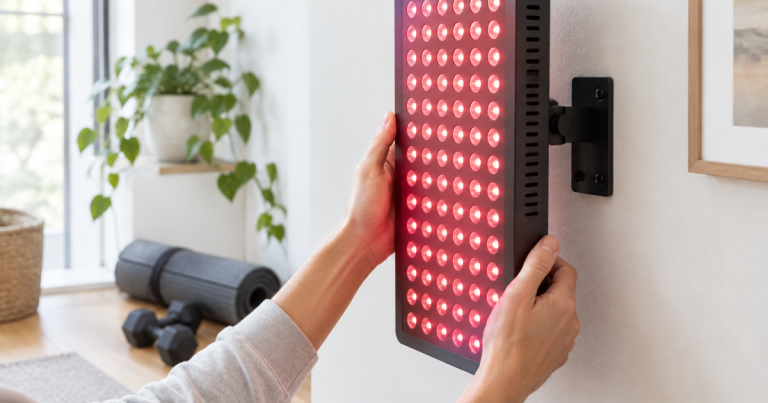
Seated use favors smaller and mid-size panels because you can align the panel with your face, chest, shoulder, or knees without needing a tall installation. This is the easiest path for apartments, shared rooms, and routines that happen at a desk or vanity.
Standing sessions
Standing sessions expose the limits of a small panel quickly. If the panel is short, you will choose between upper body coverage and lower body coverage, or you will reposition during the session. A taller half-body panel reduces that friction. A near full-body setup reduces it further but takes over more physical space.
Lying-down sessions
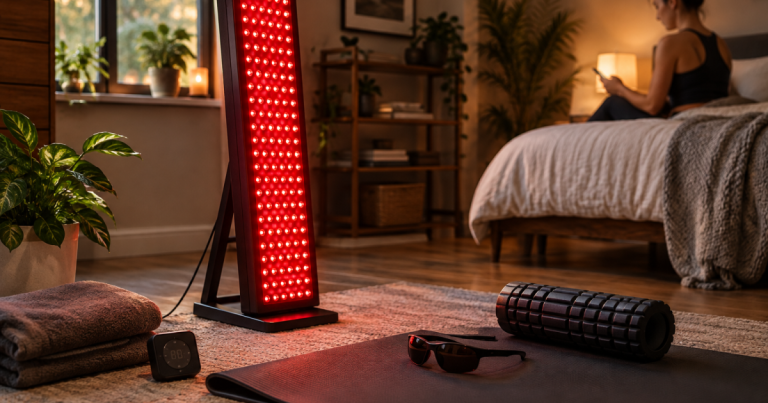
Bed or floor routines are more setup-sensitive. The question is not only panel size; it is whether the panel can be positioned securely at the right angle without awkward balancing. For this use, mounting and stand compatibility can matter as much as raw coverage.
Step 3: Decide how much repositioning you will accept
Repositioning is the hidden cost of buying too small. It is not a failure if you choose a compact panel, but it should be intentional. If you are comfortable doing face, then torso, then legs as separate passes, a smaller unit can stretch surprisingly far. If you want a clean ten-minute session with minimal thinking, larger coverage is worth considering.
Use this simple filter: if you expect to move the panel more than once in a normal session, size up or simplify your goal. Most abandoned routines do not fail because the panel was technically incapable; they fail because the session became fiddly.
- One position: best for face, chest, back, or broad front-body routines with a panel large enough for the target area.
- Two positions: workable for front and back, or upper and lower body, if you do not mind a slightly longer routine.
- Three or more positions: better suited to occasional targeted use than a daily habit.
Step 4: Account for beam angle and distance
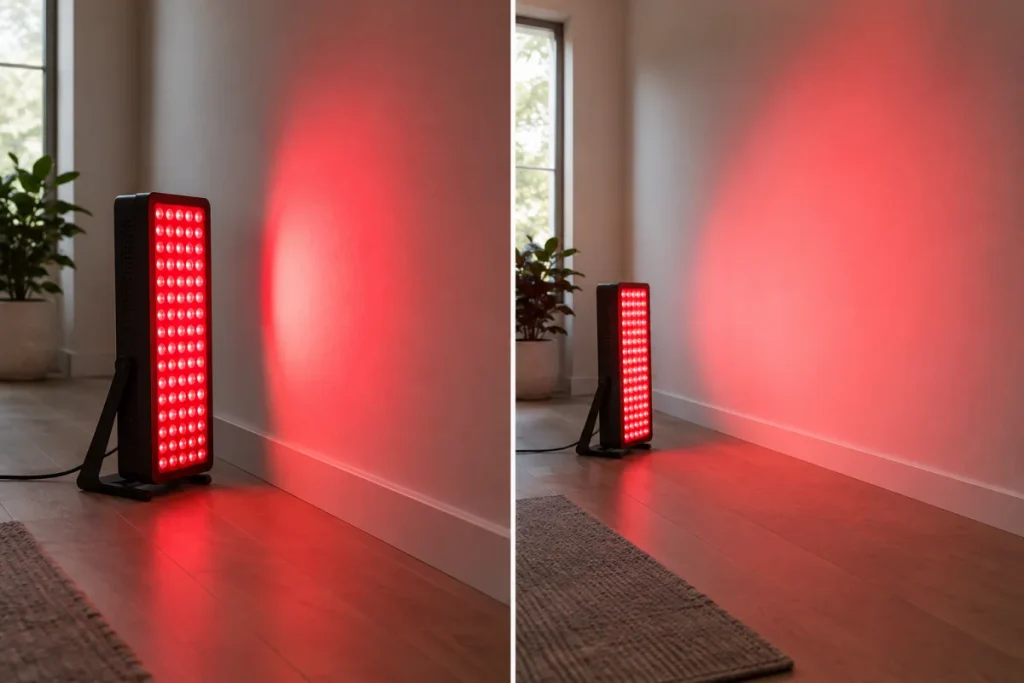
Panel dimensions tell you the physical size of the device. Beam angle and distance influence the usable light field in front of it. A wider spread may feel more forgiving for broad coverage, while a narrower spread may make alignment more important. The catch is that published reporting is not always consistent across brands, so beam angle should be treated as a comparison clue, not a guaranteed outcome.
Distance also changes the experience. Farther placement can cover more of the body, but light intensity generally decreases with distance. Closer placement can feel more focused but may cover a smaller area. Instead of chasing an exact universal number, choose a panel size that lets you maintain a comfortable, repeatable position without constantly correcting your stance.
Step 5: Choose the format that fits your room
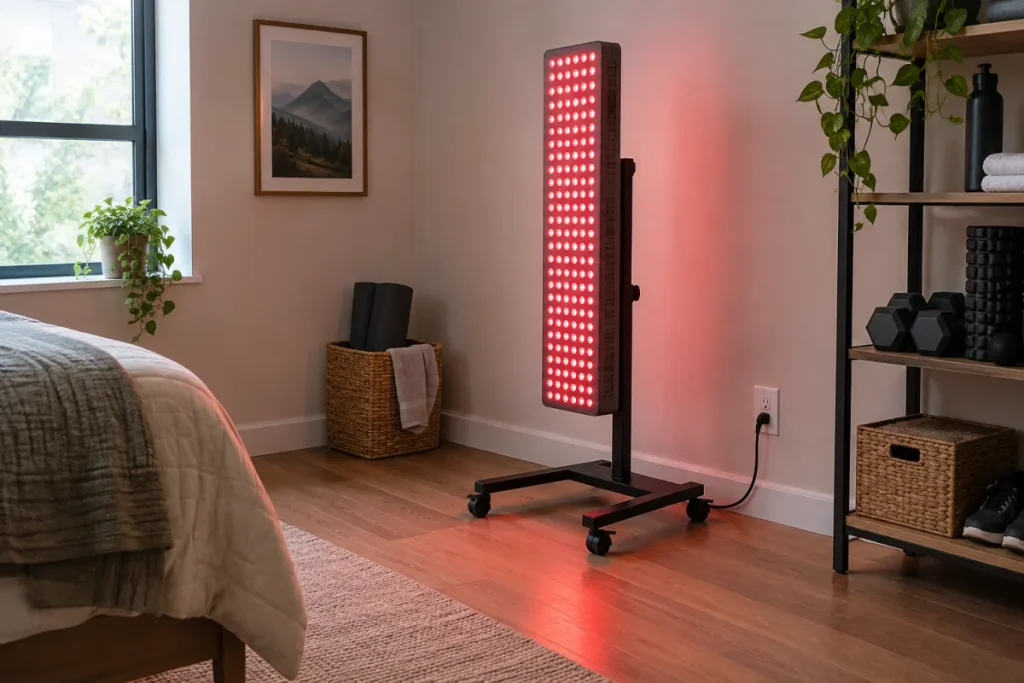
The right panel has to fit the room as well as the body. A tall panel that lives permanently on a stand can make sessions feel effortless if you have a home gym or dedicated wellness corner. The same panel can feel oversized in a bedroom with tight walking space.
Door mounting can save floor space, but it fixes the panel to one location and height range. A stand can be more flexible, but it adds bulk. Tabletop use is tidy and approachable, but it limits coverage. If you are comparing half-body formats, the Joovv Half-Max 3.0 is one example worth reviewing for its stated coverage class and mounting context rather than treating it as interchangeable with compact panels.
Common sizing mistakes
- Buying for the fantasy routine: A full-body panel only helps if you have the space and motivation to use it regularly.
- Ignoring width: Height gets attention, but width affects shoulders, hips, and whether you need to turn side to side.
- Comparing irradiance claims too literally: Brands may report measurements differently, so use them cautiously alongside dimensions, distance, and setup practicality.
- Forgetting storage: A panel that has to be dragged from a closet every time will face more resistance than one that is already positioned.
- Skipping the stand question: Large panels usually need a more deliberate mounting plan than small tabletop models.
What size should you buy?
Buy the smallest panel that covers your real priority without making the session annoying. For face-only use, compact is usually enough. For one or two body areas, a mid-size panel is often the better balance. For torso-focused routines, a half-body panel reduces repositioning. For broad front-and-back routines, a full-body or modular setup makes sense only if your room can support it comfortably.
That answer is deliberately habit-focused. Research context may discuss dose, wavelength, timing, and distance, but a home panel has to work in the messy reality of furniture, schedules, outlet placement, and patience. The best technical choice is still a poor ownership choice if it turns every session into a setup project.
What people usually ask
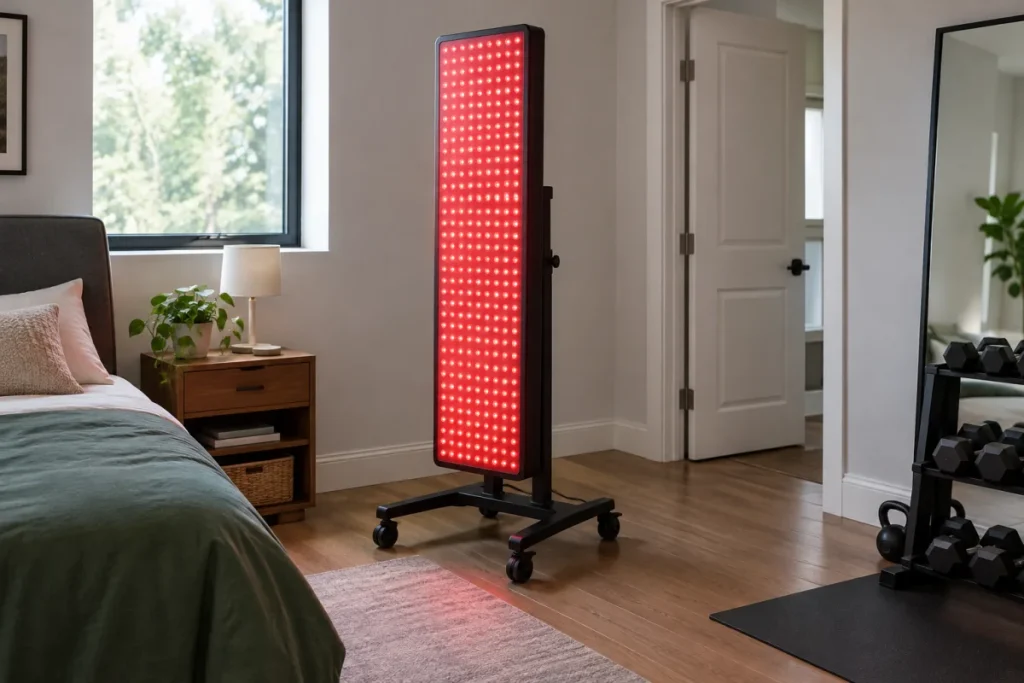
Is a bigger panel always more effective?
No. Bigger usually means more coverage at once, not automatically better results. Session consistency, distance, wavelength mix, placement, and how often you use the device all influence the routine. Larger panels are most useful when they reduce repositioning and make your intended session easier.
Can one small panel work for the whole body?
It can be used across different areas, but it will require multiple positions and more time. That can be reasonable for targeted use. It is less convenient if your goal is broad half-body or full-body coverage several times per week.
Should I buy a half-body panel or a full-body panel first?
Choose half-body if you want serious coverage but still need a manageable footprint. Choose full-body only when you know you want standing sessions, have a stable mounting plan, and value minimal repositioning enough to justify the extra size.
Explore next
Once panel size is clear, refine the routine. Session frequency is where many new owners either overcomplicate the habit or lose momentum. The guide to how often to use a red light therapy panel is a useful next step for turning the purchase into a repeatable routine.