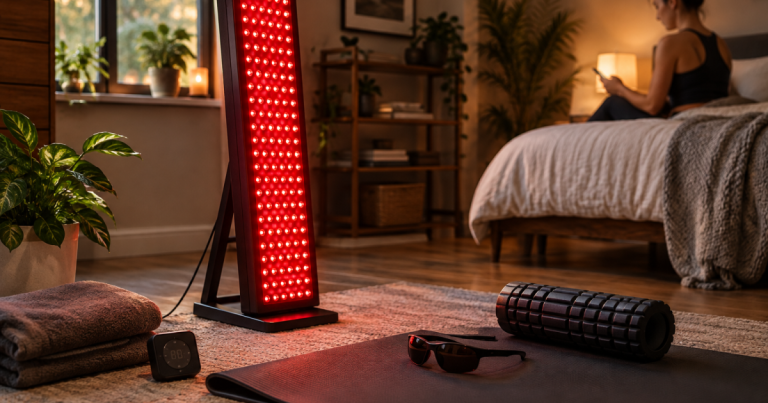
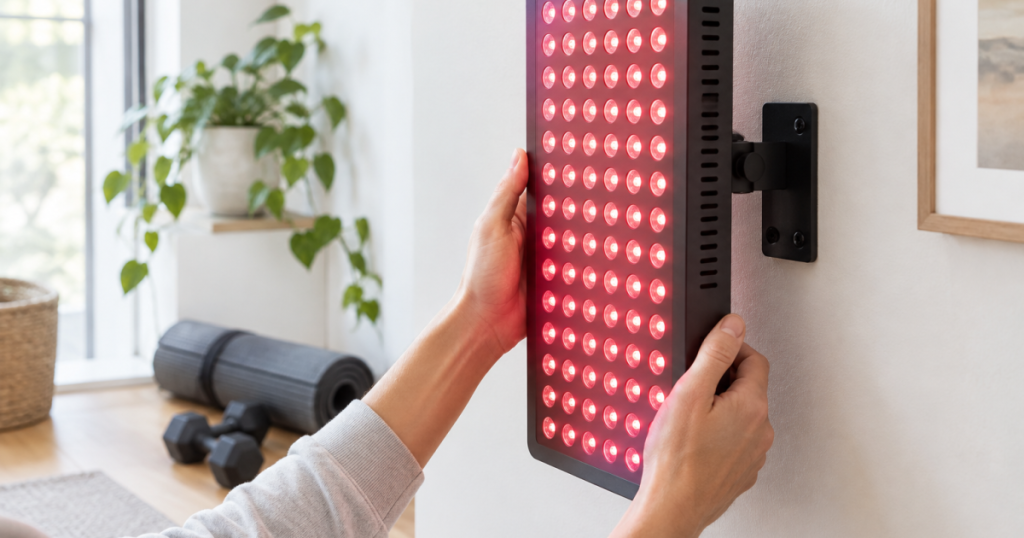
A red light therapy panel under $500 should be judged less like a luxury gadget and more like a repeatable routine tool. At this price, the winner is rarely the biggest-looking listing. It is the panel with enough usable coverage for your goal, clear enough specification reporting to compare responsibly, and a setup you can place, store, and use without turning every session into furniture rearrangement.
Health-related decisions—such as using red or near-infrared light around diagnosed conditions, photosensitizing medications, or eye disease—should be handled by a qualified healthcare professional in line with applicable medical standards and local safety requirements.
The short version for buyers trying to stay under $500
The panels most worth checking in the sub-$500 range are compact or small half-body models such as Hooga HG300, Hooga HG500, MitoPRO 300X, and Bestqool BQ60, provided the current checkout price, shipping, return terms, and warranty still fit your budget. Expect compromises: smaller treatment area, simpler mounting, less efficient full-body coverage, and more need to reposition your body between areas. For most beginners, a compact panel that is easy to use three or four times a week is a better value than a larger bargain panel with unclear reporting or awkward placement.
Because prices, bundles, and discounts move, treat $500 as a checkout rule rather than a label on a product page. Include required stands, shipping, taxes, and any protective eyewear you plan to buy. If the total crosses the line, compare it against the next size up rather than pretending it is still a budget setup.
Step 1: Decide what “worth buying” means before looking at specs
A budget panel is worth buying when it solves one clear job. Face and neck sessions, a shoulder or knee routine, a post-workout lower-leg habit, and a small desk-side recovery corner all need different amounts of light coverage. The mistake is shopping for a miniature full-body panel. Under $500, you are usually buying targeted coverage, not a spa-wall installation.
- For skincare-focused routines: prioritize comfortable placement at face height, stable tabletop use, and a red/NIR mix that is clearly stated by the brand.
- For recovery-style routines: look for a panel large enough to cover the area you actually plan to expose without constant repositioning.
- For small spaces: check whether the panel can stand safely on a table, hang from a door, or work on a compact floor stand before falling in love with a larger model.
- For habit-building: favor simple controls, manageable weight, and a storage spot close to where you will use it.
Published research on red and near-infrared light often discusses wavelength, distance, duration, and dose, but home panel buying is messier. Brands report irradiance differently, and marketing numbers are not always measured in the same way. Use specifications to screen out weak or vague options, not to calculate a guaranteed outcome.
Step 2: Use this shortlist as a starting point, not a blind ranking
These are recognizable models that budget shoppers commonly compare. The right choice depends on current pricing and your use case, so verify the live product page before buying.
Hooga HG300: the compact starter to beat for targeted use
The Hooga HG300 is the kind of panel that makes sense when you want to start small and stay honest about coverage. It is best treated as a targeted panel for the face, neck, hands, joints, or one focused area at a time. That limitation is not a flaw if your goal is a low-friction routine rather than maximum body coverage.
The trade-off is obvious: you will reposition more often than you would with a taller panel. If you already know you want torso or leg coverage in a single session, compare it with the HG500 or a step-up half-body unit before buying.
Hooga HG500: the sensible stretch if the current price still fits
The Hooga HG500 is worth checking when you want more usable area but still want to stay in the budget lane. For many beginners, this size class feels more forgiving because it can cover a larger target area without demanding a full-size setup.
The main caution is total cart cost. A panel that looks budget-friendly before accessories can stop being a sub-$500 buy once shipping, a stand, or bundled add-ons are included. If the delivered price gets close to larger half-body options, compare the longer-term ownership value rather than only the discount.
MitoPRO 300X: the compact premium-style pick to compare carefully
The MitoPRO 300X belongs on the shortlist for buyers who want a compact panel but care about brand ecosystem, build expectations, and a path to a larger setup later. It is not the choice for someone who wants maximum coverage per dollar at all costs; it is more appealing if you want a polished small panel that can anchor a simple routine.
If you like this direction but already suspect you will outgrow compact coverage, compare it with the larger Mito Red Light MitoPRO 750X specs page to see what changes when you move into a bigger format. That comparison can prevent the classic beginner mistake: buying small, then immediately wishing the panel reached more of your body.
Bestqool BQ60: the value listing that needs extra verification
The Bestqool BQ60 can be attractive to shoppers looking for a low entry price, but it deserves a more cautious read. With value-focused brands, slow down and confirm the details that affect ownership: wavelength listing, irradiance reporting method, warranty language, return window, included mounting hardware, and whether customer support is clearly described.
This does not mean skipping it. It means treating the low price as one piece of the decision, not the decision itself. A budget panel becomes expensive if it is hard to return, hard to position, or unclear about what it is actually delivering.
Step 3: Compare the compromises that matter most
Under $500, every panel makes a trade. The useful question is which compromise you can live with.
- Usable treatment area: Smaller panels work well for focused routines but are inefficient for full-body sessions. If you want front torso, back, and legs regularly, a compact panel will feel slow.
- Irradiance disclosure: Prefer brands that explain how their light output is measured. Do not compare one brand’s headline number to another’s without checking distance and method.
- Wavelength clarity: Look for clearly listed red and near-infrared wavelengths. A vague “red/NIR technology” claim is less useful than a stated wavelength profile.
- Mounting and placement: A good panel still needs a stable position. Door hooks, tabletop stands, and floor stands all change how often you will actually use it.
- Return window and warranty: Budget buyers should be more, not less, careful here. If a panel does not fit your room or routine, return terms matter.
- Growth path: Some compact panels remain useful as face, desk, or travel-friendly home units even after you add a larger panel later. Others become redundant quickly.
If your main constraint is floor space rather than budget alone, read how to fit a red light therapy panel into a studio apartment before choosing a size. Placement often decides whether a budget panel becomes a habit or a box in the closet.
Step 4: Avoid the common budget-panel traps
The first trap is buying the highest claimed irradiance number without understanding the measurement. Irradiance can be useful, but brand-reported figures may use different devices, distances, and testing conditions. Treat it as a comparison clue, not a precise dose guarantee.
The second trap is assuming more LEDs automatically means better value. Panel geometry, distance, beam angle, heat management, and how much of your body is actually in front of the unit all affect the ownership experience. A tidy smaller panel at the right height can beat a larger awkward panel you avoid using.
The third trap is forgetting your surrounding routine. If you plan to use red light around cleansing, serums, or moisturizer, build a sequence that keeps your skin comfortable and your panel clean. For skincare timing, the guide on how to time a red light panel around skincare is a useful next read.
The fourth trap is buying for a future version of yourself who has unlimited time. Budget panels reward consistency. If your realistic routine is 10 minutes near your desk or after a shower, choose the model that supports that routine cleanly.
Step 5: Match the panel to your first 90 days
For your first three months, aim for repeatability rather than optimization. Pick one primary use case, one location, and one session window. That might be face and neck before your evening skincare, quads and knees after training, or shoulders while sitting near a low table. Keep distance and timing consistent enough that you can notice whether the routine is sustainable.
- Choose Hooga HG300 if your routine is focused, your space is tight, and you are comfortable treating one area at a time.
- Choose Hooga HG500 if you want more coverage and the current delivered price still leaves room in the budget.
- Choose MitoPRO 300X if you want a compact panel with a more upgrade-minded feel and do not need broad body coverage yet.
- Choose Bestqool BQ60 only after verifying the current specs, support terms, and return policy closely.
My editorial preference for most beginners is to buy the smallest panel that comfortably covers the routine you will repeat, not the largest panel you can squeeze under $500. The best budget red light therapy panel is the one that lets you learn placement, timing, skin comfort, and consistency without overspending before you know what kind of user you are.
What to check before you buy
- Confirm the current cart total is below $500 after shipping, taxes, and required accessories.
- Read the warranty and return policy on the seller’s current page, not only a marketplace snippet.
- Check whether mounting hardware or a stand is included.
- Confirm the listed wavelengths rather than relying on broad “red light” wording.
- Look for an irradiance explanation that includes measurement distance or method.
- Measure the spot where the panel will live, including clearance behind a chair, door, or table.
Bottom line
A sub-$500 panel can be a smart first buy if you treat it as a targeted wellness tool. Do not expect full-body convenience, clinical precision, or a guaranteed outcome from any entry-level device. Do expect to learn what size, placement, and timing make sense for your life. Once those basics are clear, upgrading becomes a calmer decision instead of a reaction to marketing pressure.