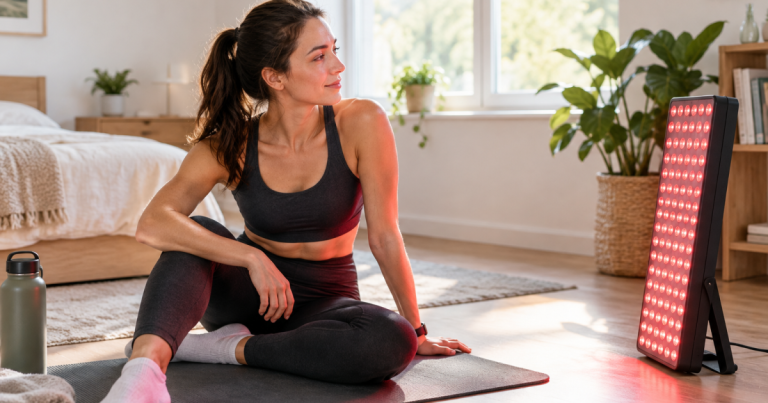
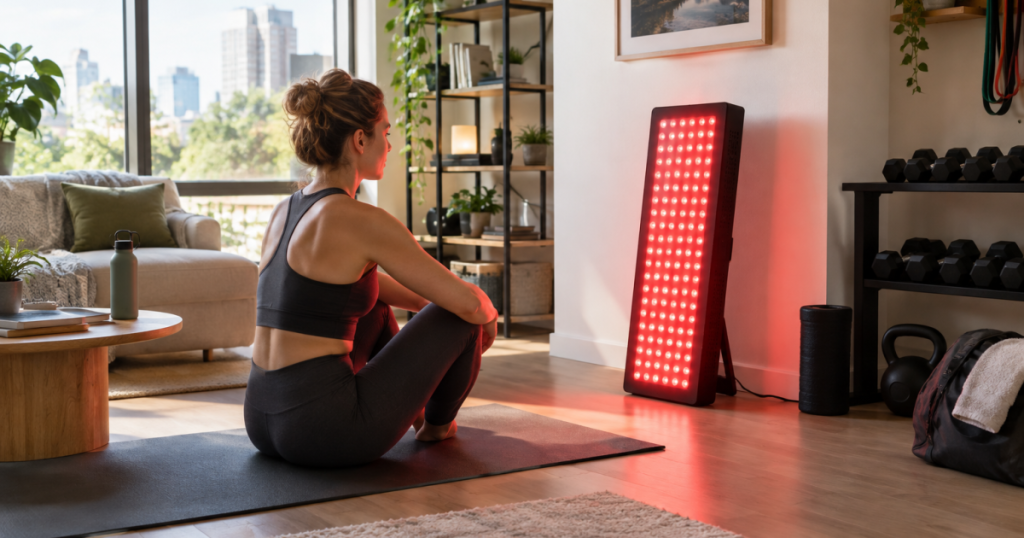
The glow is no longer confined to clinics, gyms, or biohacker corners. Red light therapy panels have become part of the home wellness conversation because they promise a rare mix: a visible ritual, a technical spec sheet to compare, and a routine that can fit into ten quiet minutes.
Diagnosis, treatment decisions, or use around a medical condition should be handled with a qualified healthcare professional in line with applicable clinical standards and local safety requirements.
The short answer
Home light panels became popular because they make wellness feel both tangible and manageable. You can see the device, choose a body area, set a repeatable session, and build the habit around recovery, skincare support, relaxation, or general self-care without booking an appointment every time.
That is why the category resonates with different kinds of buyers for different reasons. A skincare-focused user may care most about facial positioning, eye comfort, and a panel that fits on a vanity or small table. Someone thinking about training recovery may care more about coverage across the back, hips, knees, or calves. A busy parent or remote worker may simply want a device that can live in one spot and turn ten minutes of downtime into a defined reset.
The short answer also comes with a practical caveat: popularity does not make every panel equally useful. The best match is usually the one that removes the most friction from the routine. If a panel is too bright for the room, too awkward to mount, too large to store, or too complicated to use consistently, its impressive spec sheet matters less. Home wellness gear succeeds when it fits the behavior, not just the wish list.
A helpful way to think about the trend is to separate the buying decision into three layers:
- Use case: Face, joints, back, legs, general relaxation, or a mix of goals.
- Environment: Bedroom, bathroom, home gym, office corner, or shared living space.
- Routine tolerance: How many minutes, how many days per week, and how much setup you will realistically accept.
When those layers line up, the obsession starts to make more sense. People are not only buying red and near-infrared LEDs; they are buying a structured wellness moment that feels measurable, repeatable, and easy to personalize. That does not mean the device should be treated as a cure-all. It means the format has solved one of the hardest parts of any home routine: making the healthy choice feel visible, intentional, and simple enough to repeat.
The appeal is not one single miracle claim. It is the combination of a simple ritual, increasingly polished hardware, social-media-friendly visuals, and a buyer-friendly spec culture where people can compare wavelength mixes, panel size, mounting options, and coverage before committing.
What changed: the panel made the routine easier to own
Small handheld light devices existed before the current wave, but the panel format changed the feel of the category. A panel can cover more area at once, sit on a stand or door mount, and become part of a room instead of a gadget you have to hold in place. That matters because consistency usually depends on reducing friction.
For motivated home users, the routine can be almost architectural: a stool, a mat, a timer, protective eyewear when appropriate, and a corner that feels like a compact recovery zone. Red light therapy panels fit neatly into this kind of environment because they combine a wellness ritual with the satisfying order of a well-designed setup.
The broader home wellness market also made room for them. People already compare massage guns, mobility tools, sleep routines, skincare devices, and home gym upgrades. A light panel sits comfortably in that ecosystem: technical enough to research, aspirational enough to enjoy, and simple enough to use without turning every evening into a science project.
The evidence-aware appeal: interesting, not magical
Part of the obsession comes from the language around red and near-infrared light. Wavelengths, irradiance, distance, and timing sound precise, and serious shoppers enjoy learning what those terms mean. The responsible way to read the category is to separate three things: published research context, manufacturer specifications, and everyday user routines.
Research interest around red and near-infrared light helps explain why people are curious, but at-home panels should not be treated as guaranteed treatments or shortcuts to medical outcomes. Product pages may list technical details, yet brands do not always report measurements in identical ways. That is why a stated irradiance number from one company is not automatically equivalent to another unless the measurement method is clear.
For shoppers who want a cleaner way to compare hardware, the Red Light Panel Specs database is useful because it organizes fields such as coverage class, wavelength profile, mounting options, dimensions, and irradiance reporting in plain English. That kind of structure turns the category from a blur of claims into a set of practical trade-offs.
Why the ritual feels so compelling
A good wellness habit has to feel rewarding before results are obvious. That is one reason light panels have so much staying power: the session itself feels intentional. You dim the room, position the panel, start the timer, and step away from scrolling for a few minutes. Even before debating outcomes, the ritual creates a boundary around recovery or self-care.
There is also a subtle design appeal. A panel looks like equipment, not decoration, but the best home setups can feel clean and almost spa-like. For people building a small home gym, recovery corner, or evening wind-down space, the device becomes part of the room’s identity. It signals, “This is where I take ten minutes and reset.”
That emotional appeal should not be dismissed as shallow. Expensive wellness gear only earns its place when it gets used. If the visual presence of a panel makes the habit easier to remember, the design is doing practical work.
The practical reasons buyers keep comparing them
Once people get interested, the buying decision becomes more specific. The main questions are not glamorous, but they determine whether a panel fits real life:
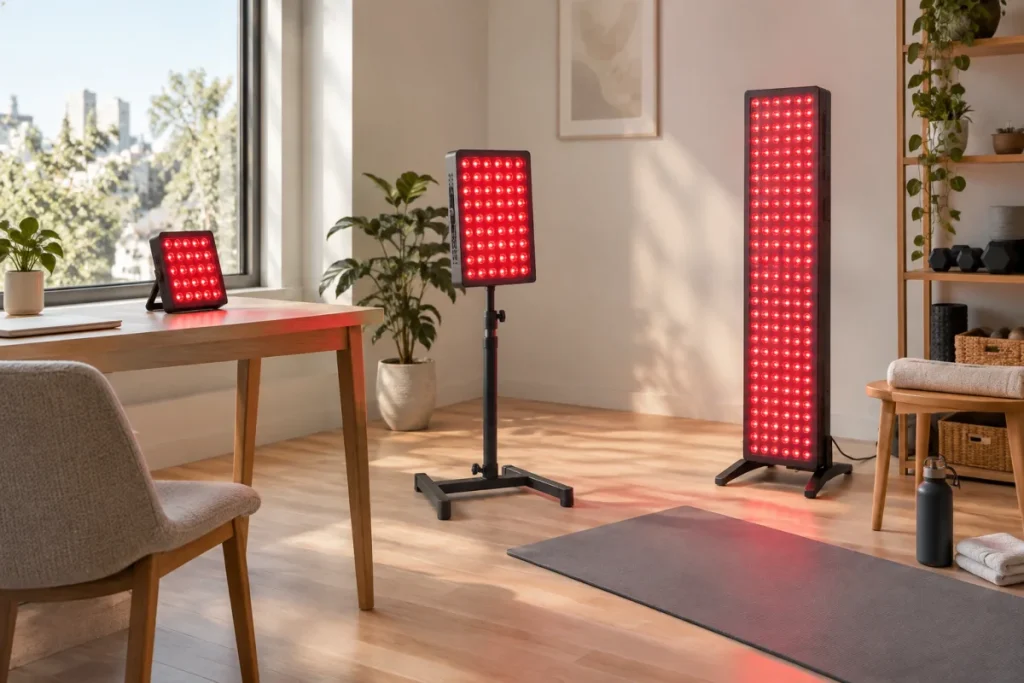
- Coverage: A tabletop unit can suit face-focused or desk-adjacent routines, while larger half-body and full-body formats reduce repositioning.
- Space: A bedroom corner, home gym wall, or closet-adjacent setup changes what size and stand style feels realistic.
- Session flow: The best panel is often the one you can use without rearranging furniture every time.
- Specs: Wavelength mix, stated output, dimensions, and mounting options matter, but they need context rather than blind number-chasing.
- Comfort: Heat, brightness, distance, eyewear, and posture all affect whether the routine feels sustainable.
This is where the obsession becomes less about hype and more about fit. A compact panel may be more useful than a larger one if it stays accessible. A larger unit may be worth considering when someone wants broader coverage and has a dedicated space. Neither choice is automatically smarter; the right answer depends on the body area, room, budget, and routine.
Social proof helped, but specs kept people researching
Red light sessions photograph well. The glow is dramatic, the setup looks futuristic, and the ritual is easy to share. That visibility helped the category spread beyond enthusiast forums into home gyms, skincare spaces, and wellness feeds.
Still, the reason many buyers keep researching is not just the image. Panels invite comparison. A shopper can look at wavelength listings, coverage class, size, warranty length, mounting options, and accessory ecosystems. That makes the purchase feel more concrete than many wellness trends, even when the science conversation remains nuanced.
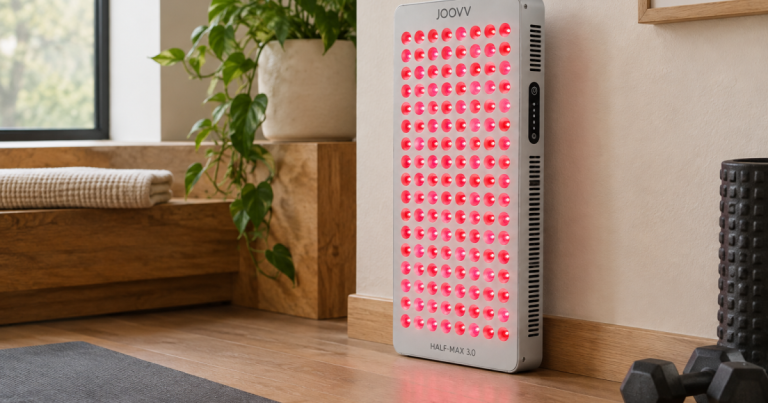
For example, a modular half-body panel raises different ownership questions than a compact tabletop device: where it lives, whether it needs a stand, how easy it is to align with the torso or legs, and whether expansion matters later. If you want to see how those trade-offs show up in a real editorial review, the Joovv Half-Max 3.0 review is a useful reference point without assuming that one format suits everyone.
Common mistakes when the trend gets exciting
The first mistake is buying the largest panel the budget allows without planning the room. Large coverage is appealing, but a device that is awkward to position can become expensive wall art. Measure the space, think about your standing or seated posture, and picture the routine on a tired weekday.
The second mistake is treating one spec as the whole story. Wavelengths, irradiance reporting, and panel dimensions all matter, but they work together. A single impressive number does not tell you how comfortable the session feels or whether the coverage matches your goal.
The third mistake is expecting the device to replace basic recovery habits. A panel can be part of a thoughtful routine, but sleep, movement, nutrition, mobility, and realistic scheduling still do the unglamorous heavy lifting. The most satisfying setups tend to support a broader rhythm rather than promise a shortcut.
Common questions
Are people buying panels mainly for skincare or recovery?
Both, and often neither exclusively. Some users are drawn to face-focused routines, others to post-workout recovery rituals, and many simply want a calm, repeatable wellness habit. The body area and routine should guide the panel size more than the trend itself.
Do you need a full-body panel to start?
No. A full-body format can reduce repositioning and feel more complete, but it also asks for more space and commitment. A smaller or mid-size panel can be a better first choice if it is easier to place, store, and use consistently.
Why do panel specs seem hard to compare?
Brands may report technical details using different methods, especially around output measurements. Compare like with like where possible, and give practical factors such as coverage, distance, mounting, and routine fit as much attention as headline numbers.
Where the obsession becomes useful
The best reason to care about this trend is not that every claim is settled or every setup looks impressive online. It is that the category encourages people to design a repeatable wellness ritual around their actual space, schedule, and goals.
Red light therapy panels became a home wellness obsession because they sit at a sweet spot: technical enough to reward research, simple enough to use, and visually compelling enough to make a routine feel special. The smart next step is to stay curious without getting swept up. Compare the device, plan the room, protect the habit, and keep expectations grounded.
For more independent panel research, setup ideas, and routine-focused explainers, the Red Light Vitality blog is a natural place to keep reading.