
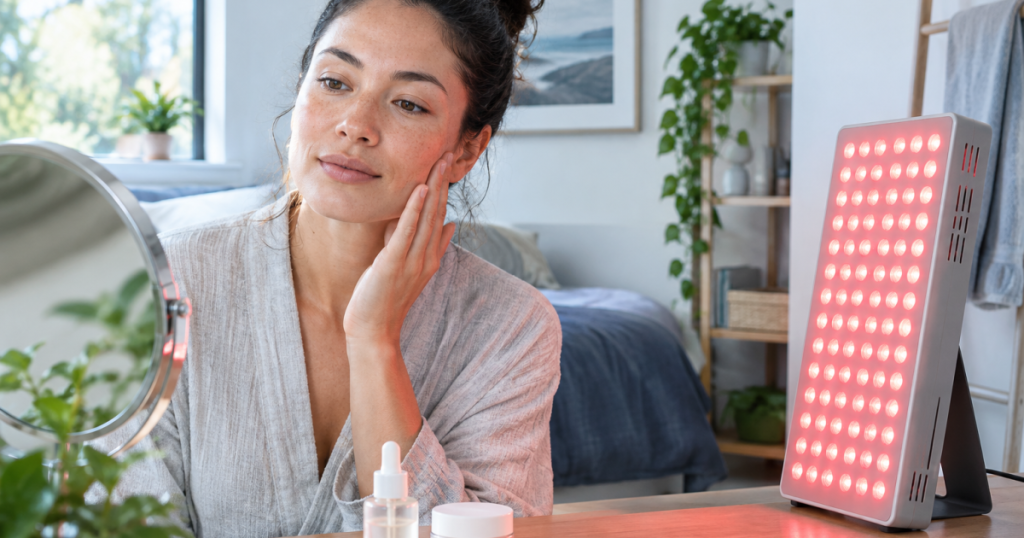
Dark spots change the emotional math of a light routine: what feels calming for one person can feel risky for someone watching pigment closely. The concern around red light therapy melasma risk is real enough to deserve a careful answer, not a blanket yes or no.
At-home red and near-infrared panels do not work like tanning beds, and they are not UV devices. Still, heat, visible flushing, skin irritation, medication-related photosensitivity, and aggressive routines can make pigment-prone skin more reactive.
Health note: Diagnosis and treatment decisions for melasma, post-inflammatory hyperpigmentation, medication-related photosensitivity, or changing skin spots should be handled by a board-certified dermatologist or qualified healthcare professional in line with applicable clinical standards and local requirements.
The big picture
An at-home red light panel can potentially worsen melasma, sun spots, or post-inflammatory hyperpigmentation in some people, but usually not because red light is “tanning” the skin the way ultraviolet exposure does. The more practical concern is that pigment-prone skin can respond badly to heat, prolonged warmth, irritation, or light sensitivity. Near-infrared light can also feel warmer because it penetrates more deeply and is invisible, so users may not notice intensity in the same way they notice bright red light.
That distinction matters. A panel routine that is comfortable, brief, and cool may be very different from a long face session close to a large panel in a warm room after using strong actives. Skin care is full of tiny variables pretending to be one variable. Pigment is where those details tend to send receipts.
Melasma, sun spots, and PIH are not the same problem
Melasma is a chronic pigmentation pattern often linked with hormones, genetics, visible light sensitivity, heat, and sun exposure. It commonly appears as brown or gray-brown patches, especially on the cheeks, forehead, upper lip, or jawline. Many people with melasma already know that heat can be a trigger even without a sunburn.
Sun spots, also called solar lentigines, are usually related to cumulative sun exposure. They may darken with UV exposure and can become more noticeable as the surrounding skin tone changes. Red light panels are not UV sources when used as intended, but a routine that leaves skin warm or inflamed could still make existing discoloration look more obvious.
Post-inflammatory hyperpigmentation, or PIH, is pigment left after irritation or inflammation. Acne, eczema flares, peels, waxing, over-exfoliation, and picking can all set the stage. For PIH-prone skin, the issue is often less about the device alone and more about whether the total routine is irritating.
Why a panel session might make pigment look worse
Heat and lingering warmth
Melasma-prone skin is often sensitive to heat. A panel that feels pleasantly warm on the shoulders may be too much for the face, especially at close range or during longer sessions. Near-infrared wavelengths are invisible, so a combo red/NIR panel can deliver light you cannot see while still contributing to warmth.
Too much intensity, too soon
Panel pages often highlight irradiance, but those numbers are not always reported in the same way across brands. Distance, angle, measurement method, and treatment area all affect what reaches the skin. For a deeper explanation of why these figures are tricky, see this guide to red light therapy panel irradiance.
Photosensitizing medications and products
Some medications and topical products can make skin more reactive to light. The American Academy of Dermatology notes that people whose skin is light-sensitive can develop more intense, longer-lasting dark spots. That does not mean every person on a medication will have a problem, but it does mean pigment changes after light exposure should be taken seriously.
Stacking too many skincare stressors
A red light session layered after exfoliating acids, retinoids, scrubs, waxing, or a strong peel can turn a gentle ritual into a stress test. Even if the panel itself is not the root cause, the combined routine may push the skin toward redness or inflammation, and inflammation can feed hyperpigmentation.
A cautious face routine for pigment-prone skin
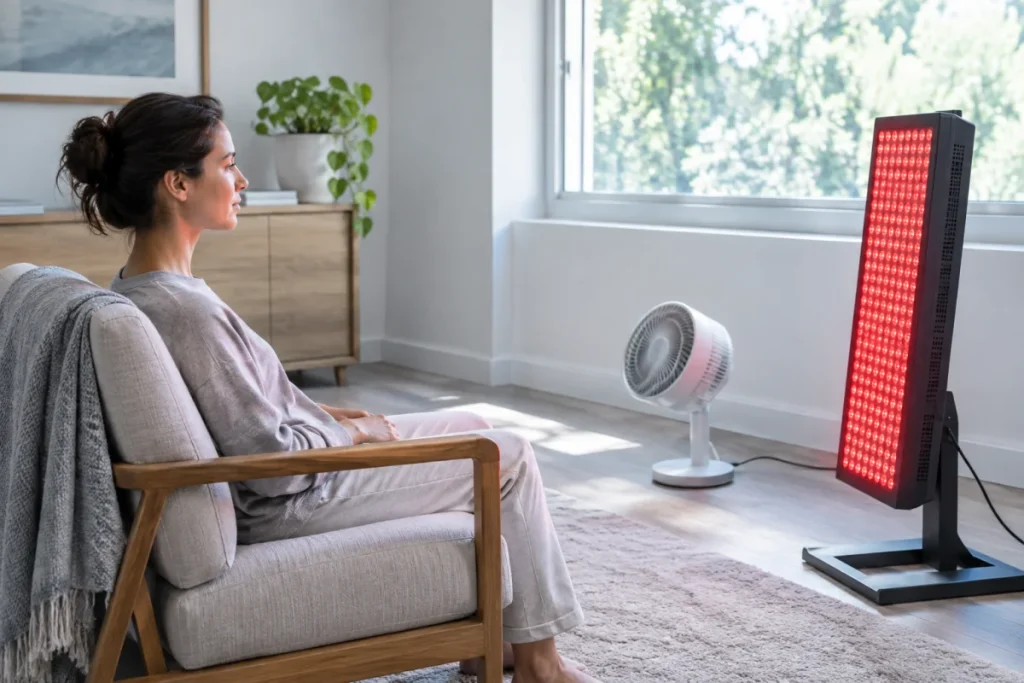
For melasma or dark-spot-prone skin, the goal is not to build the most intense routine. It is to create a repeatable session that does not leave the face hot, flushed, tight, or irritated afterward.
- Keep the face cool. Use the panel in a comfortable room and stop if warmth lingers after the session.
- Start with shorter sessions. Build slowly rather than beginning with the maximum time suggested for the device.
- Increase distance before increasing time. More space from the panel can soften intensity and heat.
- Be cautious with near-infrared on the face. If your panel allows separate red and NIR controls, pigment-prone users may prefer beginning with red-only face sessions and watching skin response.
- Do not pair sessions with harsh actives. Avoid using exfoliating acids, strong retinoids, peels, or scrubs immediately before a panel session unless your dermatologist has directed that routine.
- Use eye protection appropriately. Bright panels can be uncomfortable around the face, and protective eyewear can make sessions easier to repeat.
- Take photos in consistent light. Bathroom mirrors lie with confidence. Same location, same lighting, same time of day gives you a better read on pigment changes.
Daily sunscreen remains the non-negotiable anchor for anyone monitoring melasma or dark spots. A panel routine cannot compensate for unprotected UV exposure, and visible-light-sensitive melasma may require more targeted sun-protection habits than a basic morning moisturizer with SPF.
Where panel format changes the risk calculation
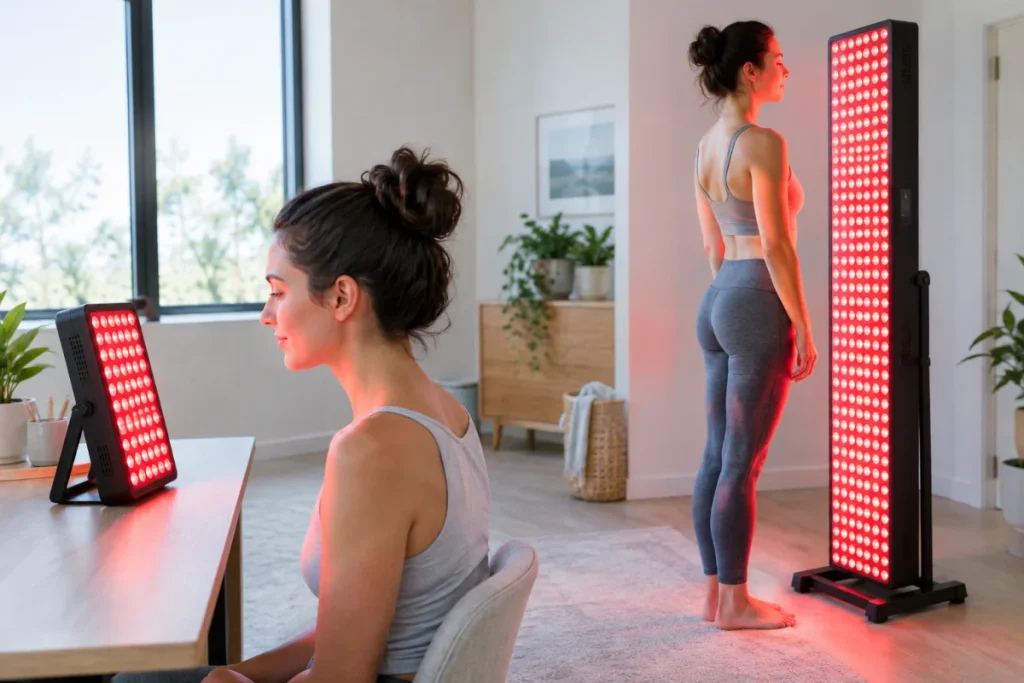
A large body panel is not automatically wrong for skincare, but it can be easier to overdo a face session because the illuminated area is broad and the output may feel more intense up close. Desktop and half-body panels are often easier to position for controlled face exposure, while full-body panels make sense when the routine is also about torso, legs, or recovery-style use.
For readers sorting through panel formats, database entries such as the Mito Red Light MitoPRO 750X and PlatinumLED Therapy Lights PlatinumLED BIOMAX 450 are useful because they put fields like listed wavelengths, mounting options, and irradiance reporting in a consistent place. Those fields do not tell you how your melasma will behave, but they help you avoid guessing about the tool you are putting near your face.
When to pause the panel
Stop using the panel on your face and get professional guidance if you notice new brown or gray-brown patches, existing melasma becoming darker, pigment spreading beyond its usual borders, unusual burning or stinging, or redness that lasts well beyond the session. Also pause if you start a medication known to affect light sensitivity until a qualified clinician has reviewed your situation.
A pause does not have to mean the panel is permanently off the table. It means the signal from your skin is too noisy to interpret safely. Give the face time to return to baseline before changing variables again, especially if you also adjusted a retinoid, exfoliant, acne treatment, sunscreen, or prescription medication around the same time. Pigment changes are slow data; reacting to every mirror check can lead to more product switching, more irritation, and less clarity.
If you and your clinician decide it is reasonable to restart, make the restart boring and measurable: one face-related change at a time, lower exposure than before, more distance, no near-infrared if your device allows that control, and no aggressive actives around the session. Keep notes on date, session length, distance, warmth, redness, and any visible pigment shift in consistent lighting. If the same pattern returns after a cautious re-challenge, that is useful information rather than a personal skincare failure.
Any mole or spot that changes in size, shape, color, border, sensation, or bleeding pattern should be evaluated medically. That is not a red light panel troubleshooting issue; it is a skin-health issue.
Key questions answered
Can red light panels cause melasma?
They are not known to cause melasma in the same way UV exposure can trigger pigmentation, but they may aggravate existing melasma in some users if sessions create heat, flushing, irritation, or light-sensitive reactions.
Is near-infrared worse for dark spots?
Near-infrared is not automatically worse, but it can feel warmer and is harder to judge visually because you cannot see it. For heat-triggered melasma, that warmth is the practical concern.
Should you use a panel over skincare products?
For pigment-prone skin, a simple approach is usually safer: clean, dry skin before the session, then bland moisturizer afterward if needed. Strong actives, peels, and exfoliants are better kept away from panel time unless your dermatologist has built them into your plan.
How soon would worsening show up?
There is no reliable universal timeline. Some people notice flushing or warmth immediately, while pigment changes may become apparent over repeated sessions. That is why consistent photos and conservative session changes are more useful than guessing day to day.
What stands out
The safest editorial answer is cautious but not alarmist: red light panels are not UV tanning devices, yet pigment-prone skin can still react poorly to heat, irritation, near-infrared warmth, or photosensitivity. If melasma or dark spots are your main concern, treat the panel as one part of a skin environment, not as an isolated gadget.
A good routine should feel boring in the best way: controlled distance, modest time, cool skin, no aggressive product stacking, and clear reasons to pause. That is how a skincare ritual stays useful without turning every session into a mirror inspection under courtroom lighting.