
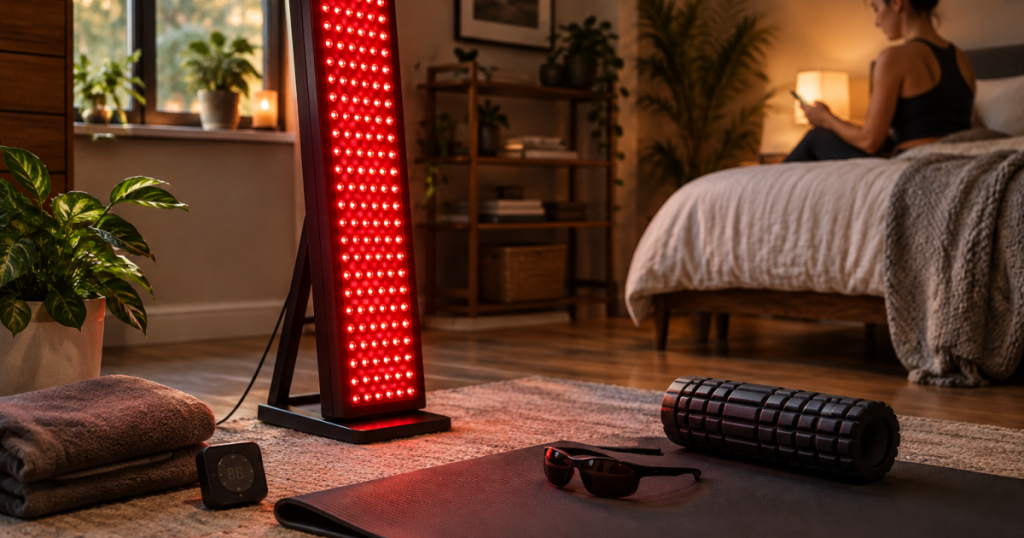
A full-height red light setup can make home sessions feel calm, efficient, and easy to repeat, but the best full body red light therapy panel is not simply the tallest panel or the one with the biggest wattage claim. The better choice is the panel that covers the treatment area you care about, reports output clearly, fits your room, and remains convenient after the first week of motivation fades.
Health-related use of red and near-infrared light for symptoms, eye conditions, medication interactions, or treatment decisions should be handled by a qualified healthcare professional in line with applicable clinical standards and local care requirements.
What to know first
For home routines, a strong full-body panel should be judged in five layers: usable coverage, wavelength mix, output reporting, mounting or stand cost, and the policies that affect ownership after delivery. Marketing wattage belongs lower on the list because it does not tell you how much light reaches the skin at a practical distance.
The most useful answer is this: choose a full-body panel only when you want broad coverage in one position and have a stable place to use it. If you mostly treat your face, chest, or a single recovery area, a half-body panel may be easier to place and use consistently. full-body panels make the most sense when session convenience matters enough to justify the extra size, weight, and setup planning.
Step 1: Decide whether full-body coverage is actually worth it
Full-body panels are appealing because they reduce repositioning. Instead of moving a compact panel from face to torso to legs, you can stand or sit in front of a taller light field and keep the routine simple. That convenience is the main reason to pay for the larger format.
Before choosing a model, map your real routine. A morning skincare-focused session, a post-workout leg and back routine, and a quiet evening wind-down all place different demands on the panel. A taller panel is helpful if you want torso and lower-body exposure in the same session. It is less necessary if your sessions are short, face-focused, or limited to one sore area after training.
- Choose full-body if you want fewer position changes and have a dedicated wall, corner, or stand location.
- Choose half-body if you need a lighter setup that can move between rooms.
- Choose desktop or tabletop if your routine is mostly face, neck, hands, or targeted recovery work.
Step 2: Compare output claims without getting trapped by wattage
Output is where buying guides often get messy. Brands may publish irradiance numbers, power ratings, LED counts, distance assumptions, beam angles, or internal test methods, and those figures are not always measured the same way. A higher number is not automatically a better session if the measurement distance or method differs.
Use wattage as a rough device category signal, not as a dosing shortcut. What matters more is whether the brand explains irradiance reporting clearly, gives enough context to compare distance, and offers a panel size that spreads light across the body area you plan to use. The best full body red light therapy panel for most homes is the one whose published information helps you make repeatable decisions, not the one that turns every specification into a race.
Step 3: Build a shortlist around setup, not just specs
These full-body candidates are worth comparing because they sit in the serious home-panel lane and have dedicated specification pages you can use for side-by-side research. Treat this as a buying shortlist, not a claim that every model suits every room or routine.
Block Blue Light PowerPanel Mega
The Block Blue Light PowerPanel Mega is a sensible candidate if you want to compare a large-format panel with attention to listed wavelength profile, mounting options, dimensions, and the way the brand presents irradiance information. It belongs on the shortlist for buyers who are already committed to a substantial home setup and want to check whether the panel’s physical format matches their available space.
Before buying, calculate the total setup cost, including any stand or mounting hardware you expect to use. A full-body panel that looks acceptable on paper can become awkward if the included mounting option does not fit your routine.
PlatinumLED Therapy Lights BIOMAX PRO ULTRA
The PlatinumLED Therapy Lights BIOMAX PRO ULTRA is worth comparing if you want a premium-leaning full-body option and care about reading the specification fields closely rather than relying on product-page headlines. Look at its listed wavelengths, stated coverage class, dimensions, and mounting information, then compare those fields against your available floor space and preferred distance from the panel.
This is also a good example of why buyers should separate published specifications from expected results. Specifications help you compare devices; they do not guarantee a particular skincare, recovery, sleep, or wellness outcome.
Hooga ULTRA1500
The Hooga ULTRA1500 is a practical full-body comparison point for readers who want a large panel but still want to keep the buying process grounded. Review the listed wavelength profile, dimensions, weight, mounting options, and warranty field, then decide whether it works as a permanent setup or a panel you would need to reposition.
Hooga’s smaller panels are popular entry points for many home users, but a larger model changes the ownership experience. Bigger panels are not just more light; they are more object. They need a stable location, a clear session habit, and enough room around them to avoid becoming expensive décor.
Step 4: Add the stand, mount, and room layout to the price
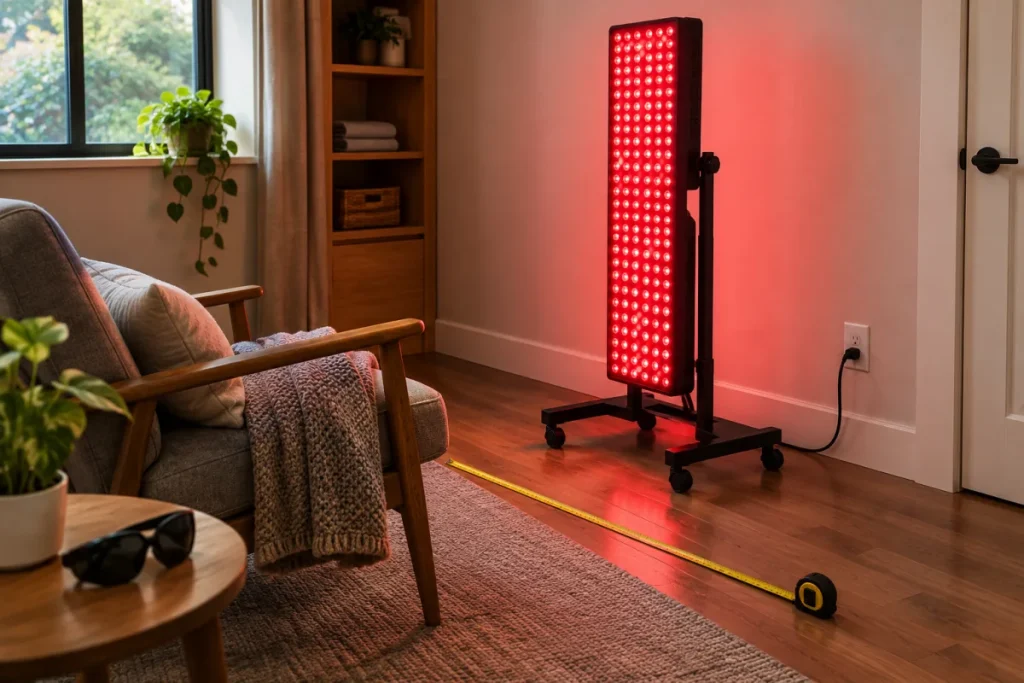
The panel price is only the starting number. A realistic budget should include the stand or mounting solution, protective eyewear when appropriate, and any room accessories that make sessions easier to repeat. A movable floor stand can be worth the added cost if several people will use the panel or if you need to change height often. A door or wall mount can keep the setup cleaner, but it reduces flexibility.
Useful accessories should solve a routine problem, not clutter the corner. For example, Hooga Protective Goggles are the kind of accessory to compare if eye comfort is part of your routine planning, while a Mito Red Light Floor Stand is the type of add-on that can change how easily a larger panel fits into daily use. Confirm compatibility before pairing any stand or accessory with a panel from another brand.
- Measure the intended space in inches, including clearance for standing, sitting, and adjusting distance.
- Check whether the panel can be used comfortably from your preferred position.
- Confirm what is included in the box and what must be purchased separately.
- Review return shipping rules, because large panels can be expensive and inconvenient to send back.
Step 5: Check policies before you commit
Return windows, warranty length, return shipping responsibility, and restocking rules matter more with full-body panels than with compact devices. A smaller panel is easier to repack and move. A large panel may require original packaging, careful handling, and more patience if it does not fit your room the way you imagined.
Read the current policy on the seller’s site before ordering. Do not rely on screenshots, older roundups, or forum comments, because prices, bundles, warranty terms, and return rules can change. If a deal looks attractive, verify whether the stand is included and whether the final checkout total still makes sense in $.
Common mistakes that lead to regret
- Buying for maximum size without deciding where the panel will live.
- Comparing irradiance numbers from different brands as if every measurement method is identical.
- Ignoring stand cost until the panel arrives.
- Assuming a full-body panel will improve consistency if the setup is hard to access.
- Choosing a panel for someone else’s routine instead of your own goals, schedule, and room constraints.
Common questions
Is a full-body panel better than two smaller panels?
Sometimes. One full-body panel is simpler and cleaner, while two smaller panels can offer flexible positioning. The better choice depends on whether you value a fixed ritual space or adjustable placement for different body areas.
How close should I stand to a full-body panel?
Follow the manufacturer’s instructions for the specific device. Distance affects intensity, coverage, heat, and comfort, so avoid copying another user’s routine unless their panel and setup are genuinely comparable.
Should I choose red light, near-infrared, or both?
Many home panels combine red and near-infrared wavelengths because users often want one device for skin-adjacent routines and deeper-feeling recovery sessions. The exact wavelength mix varies by model, so compare the listed wavelengths rather than assuming every combo panel is the same.
Practical takeaway
A full-body red light therapy panel should make sessions easier, not turn your wellness corner into a logistics project. Start with the routine you will actually repeat, then compare coverage, wavelength profile, output reporting, stand options, total $ cost, warranty, and return terms. When those pieces line up, the purchase feels less like a leap of faith and more like a well-designed recovery habit waiting for its place in the room.